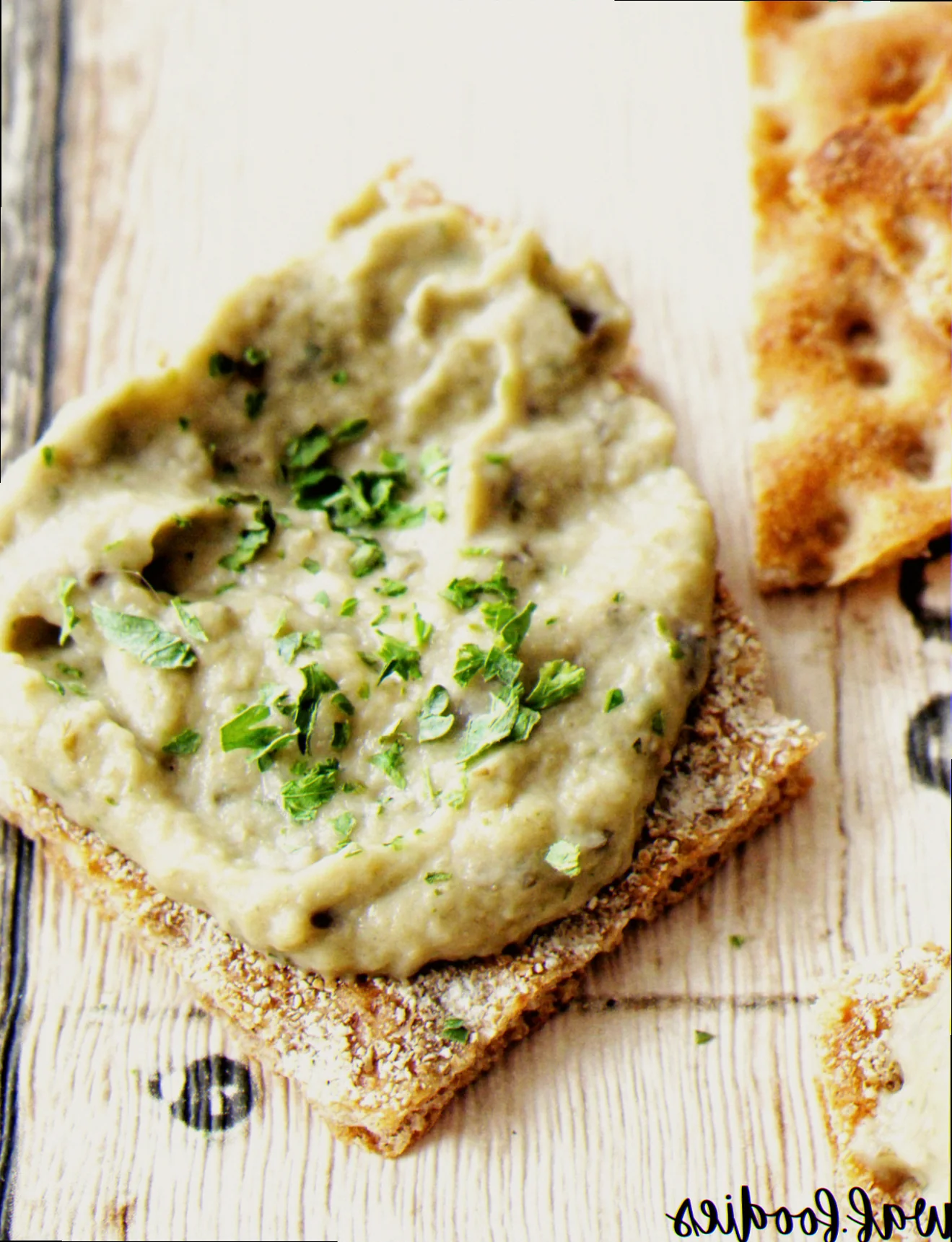
The air in the Rhodope Mountains of southern Bulgaria during late September is thick with a specific, heavy scent: the smell of blistering skin and weeping sap. This is the time of Zimnica, the communal preparation of winter stores. Families gather around the chushkopek—a vertical cylindrical kiln designed specifically for roasting peppers—while eggplants are laid directly onto the embers of wood fires until their glossy purple exteriors collapse into charred, blackened husks. This ritual is the birth of the dish we now sanitise with the label “veganer brotaufstrich aubergine,” but in its ancestral home, it is known as Kyopolou or Zacuscă. It is not merely a condiment; it is a preserved record of the harvest, intended to provide the calories and comfort necessary to survive a Balkan winter.
Where Kyopolou Comes From — and Why It Was Invented
The lineage of the eggplant spread is inextricably linked to the culinary hegemony of the Ottoman Empire, which acted as a bridge between the Levant and South-Eastern Europe for half a millennium. The eggplant, or aubergine, did not arrive in Europe as a beloved staple; it was a migrant from the East, navigating trade routes from India through Persia before the Ottomans introduced it to the Balkans in the 16th century.
The invention of the spread was a logistical necessity. In the agrarian societies of the Danube plain and the Balkan mountains, the glut of late-summer produce—eggplants, peppers, and tomatoes—posed a challenge: how to capture the fleeting peak of nutrition before the first frost. The solution was the “spread,” a high-fat, high-fibre emulsion that could be pasteurised in glass jars. By roasting the vegetables until their water content evaporated, the villagers concentrated the sugars and flavours, creating a shelf-stable paste. This was “poor man’s caviar,” a term used across the Balkans and Russia to describe a dish that provided the unctuous mouthfeel and depth of luxury roe using only the humble, earth-bound fruits of the Solanaceae family.
The Ingredients as Historical Artefacts
To understand a vegan eggplant spread, one must look at its components not as groceries, but as travellers on the Silk Road and the paths of the Columbian Exchange.
- The Eggplant (Solanum melongena): Originally domesticated in the region encompassing modern-day India and China, the eggplant was often met with suspicion in medieval Europe, where it was nicknamed the “Mad Apple” (Malum insanum) due to its bitter alkaloids. Its presence in this spread marks the triumph of Eastern agricultural techniques—specifically the Persian and Ottoman methods of salting and roasting—which transformed a bitter, sponge-like fruit into a creamy, umami-rich base.
- The Capia Pepper: While the eggplant came from the East, the red peppers that define the spread’s sweetness came from the West. Following the colonisation of the Americas, the pepper travelled from Mesoamerica to the Iberian Peninsula and eventually into the hands of Ottoman traders. In the Balkans, it was bred into the Capia—a long, fleshy, low-moisture pepper that, when roasted, provides the essential sugar to balance the eggplant’s earthiness.
- Sunflower Oil: The “vegan” nature of this spread is historically tied to the Orthodox Christian fasting calendar. During Lent and other fasting periods, animal fats like lard or butter were forbidden. Sunflower oil, which became an industrial staple in the Russian Empire and the Balkans in the 19th century, replaced animal fats, providing the lipids necessary for a smooth, spreadable emulsion that complied with religious law.
Zimnica — When and Why This Dish Is Made
The social context of the eggplant spread is one of collective labour. In Bulgarian and Serbian villages, the preparation of Kyopolou or Ajvar is rarely a solitary act. It is a seasonal marker, occurring in the “golden hour” of the agricultural year. The ritual demands that the eggplant be roasted until it is structurally compromised—its flesh turning to silk while its skin becomes carbon.
Sharing the spread is a gesture of hospitality that defines the Meze culture. It is served on thick slices of crusty bread, often accompanied by Rakia (fruit brandy). Because the spread is laborious to make—requiring hours of peeling charred skins by hand—offering it to a guest is a signal of respect. It represents the “stored sunshine” of the summer, brought out during the bleak months of January to remind the household of the earth’s fertility.
How Migration Changed the Spread Forever
As the 20th century progressed, the eggplant spread migrated from the village hearth to the urban centers of Central Europe. In the 1960s and 70s, “Gastarbeiter” (guest workers) from Yugoslavia and Turkey brought these recipes to West Germany. However, as the dish moved into the German supermarket and the “Bio-Laden” (health food store) ecosystem, it underwent a fundamental transformation.
The traditional Balkan versions are chunky, rustic, and defined by a fierce, smoky aroma derived from open flames. In its migration to the modern vegan “Brotaufstrich” format, the dish was refined into a smooth, homogenous purée. The smoky depth was often lost, replaced by the acidity of vinegar or lemon juice to ensure a longer shelf life on a grocery shelf. What was once a seasonal ritual became a year-round convenience. While the accessibility of these spreads helped popularise veganism in Germany, the visceral, scorched-earth soul of the original dish was frequently sacrificed for a texture that was easier to spread on a piece of rye bread during a quick Abendbrot.
How to Make the Ancestral Spread — The Recipe in Full
This version follows the Kyopolou tradition, which emphasizes the interplay between fire-roasted eggplant and garlic.
| Ingredient | Quantity | Why it’s here |
|---|---|---|
| Eggplants (large) | 1200g | The structural base; provides the buttery, smoky bulk. |
| Red Capia Peppers | 600g | For natural sweetness and a vibrant, rust-coloured hue. |
| Garlic Cloves | 25g | Raw pungency to cut through the heavy, roasted fats. |
| Sunflower Oil | 100ml | To create a stable emulsion and carry the fat-soluble flavours. |
| Apple Cider Vinegar | 20ml | Mimics the natural fermentation and brightens the palate. |
| Sea Salt | 12g | Essential for drawing out moisture and intensifying the umami. |
| Parsley (flat-leaf) | 15g | A fresh, herbal counterpoint to the deep, charred notes. |
Method: Begin by piercing the skins of the eggplants and peppers with a fork to prevent steam-induced explosions. If you have access to a charcoal grill, use it; otherwise, place the vegetables directly under a broiler at its highest setting (approx. 250°C). Rotate them frequently until the skins are entirely blackened and the flesh feels soft and yielding to the touch. This charring is not a mistake—it is the source of the “smoke” that defines the dish.
Once roasted, transfer the vegetables to a bowl and cover tightly with film. The trapped steam will loosen the skins. After 20 minutes, peel them carefully, ensuring you remove every bit of charred skin, as the carbon can be unpleasantly bitter in large quantities. Drain the eggplant flesh in a colander for at least 30 minutes; the “liquor” that drains away is often bitter and can make the spread watery.
Traditionalists insist on a mortar and pestle, but for a modern spread, pulse the ingredients in a food processor. Do not over-process; you want a texture that retains the integrity of the vegetable fibres. Slowly drizzle in the sunflower oil while pulsing to create a thick, glossy emulsion. Finally, fold in the minced garlic, salt, vinegar, and finely chopped parsley. Allow the spread to sit for at least two hours before serving—the raw garlic needs time to mellow, and the flavours need to marry into a singular, cohesive profile.
The Tension — What Authenticity Actually Means for This Dish
The primary tension in the world of eggplant spreads lies in the “Smoke Debate.” Purists argue that an eggplant spread made in a standard electric oven is a pale imitation of the original. They believe the flavour of woodsmoke is a non-negotiable ingredient, not a garnish. This has led to the rise of “liquid smoke” in modern vegan recipes—a controversial additive that some see as a clever hack and others see as a culinary betrayal.
Furthermore, the “smoothness” of modern spreads is a point of contention. In the village, the texture was dictated by the knife; in the factory, it is dictated by the industrial blender. The loss of texture changes the way the spread interacts with the palate—a smooth purée disappears quickly, while a rustic, hand-chopped spread demands more engagement from the eater, lengthening the experience of the flavour.
What the Spread Has Become — and What That Tells Us
Today, the “Veganer Aubergine Brotaufstrich” is a staple of the German middle-class pantry. It represents a shift in European eating habits—from the heavy meat-and-cheese Abendbrot to a lighter, plant-based diet. Its popularity tells us that the flavours of the Ottoman Empire have successfully integrated into the Western culinary consciousness, even if their origins are sometimes forgotten.
What was once a survival strategy for Balkan peasants is now a lifestyle choice for urban professionals. Yet, in every jar, the DNA of the Zimnica remains. Even the most processed supermarket version is a distant echo of a fire in the mountains, a pile of charred purple vegetables, and the ancient human desire to capture the essence of summer before the snow begins to fall.
Questions About the Eggplant Spread
What is the single ingredient you should never substitute in this spread?
The sunflower oil. While many modern cooks reach for extra virgin olive oil, its strong, peppery, and grassy notes can overwhelm the delicate, smoky sweetness of the roasted eggplant. High-quality sunflower oil provides the necessary neutral fat that allows the vegetable flavours to remain the protagonist.
Related topics: Vegan potato bake recipe · Vegan poppy seed cake recipe · Deep fried pickles recipe vegan
How does the spread differ between the Balkans and the Levant?
In the Levant (as Baba Ganoush), the spread is defined by the addition of tahini (sesame paste) and lemon juice, creating a nutty, creamy, and pale-coloured dip. In the Balkans (Kyopolou or Ajvar), the focus is on the marriage of eggplant with roasted red peppers and garlic, resulting in a sweeter, more robust, and rust-coloured profile.
Is there a version that is accessible to make at home without special equipment?
Yes. By placing eggplants directly on the ring of a gas stove, you can achieve the necessary charring and smokiness without a grill or a chushkopek. If you only have an electric oven, roasting the vegetables at the highest possible temperature until they are slightly collapsed and then adding a tiny pinch of smoked paprika (Pimentón de la Vera) can approximate the traditional flavour profile.