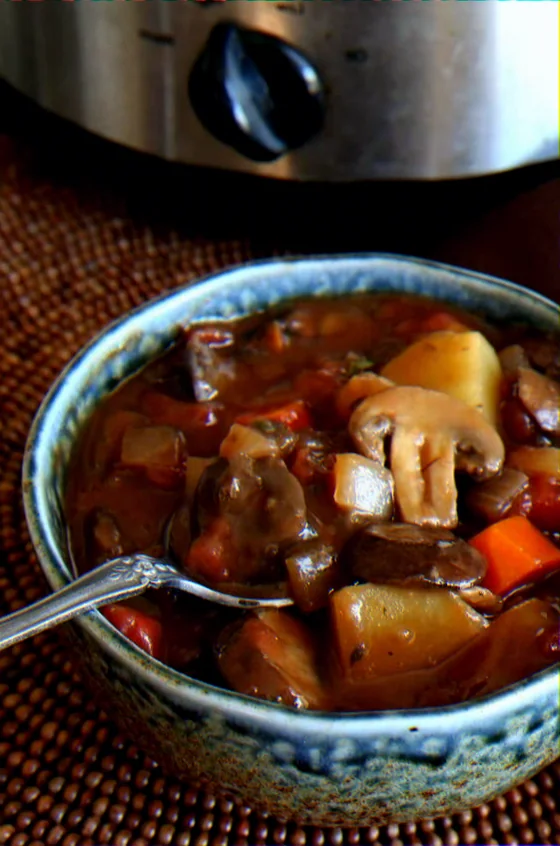
The most common catastrophe in vegan slow-cooking is The Mushy Meltdown, a state where every vegetable loses its structural integrity and dissolves into a monochromatic, textureless slurry. It tastes of over-boiled cabbage and feels like baby food, lacking the distinct bites and layered flavors that define a true stew. This guide will diagnose why your previous attempts resulted in a bland, watery mess and provide the precise corrective actions to ensure every bowl is a masterclass in plant-based technique.
What Perfect Vegan Vegetable Stew Actually Looks, Feels, and Tastes Like
Before we fix the failures, we must define the benchmark. A successful vegan stew is not a soup; it is a rich, cohesive dish where the liquid has enough body to coat a spoon and the vegetables remain distinct individuals.
| Stage | Success marker — what you should see / feel / smell / hear |
|---|---|
| Pre-Cook (Mise en Place) | Vegetables are cut into uniform 2.5cm cubes; aromatics are translucent and fragrant from a preliminary sear (120°C in a skillet). |
| Mid-Cook (4-hour mark) | The liquid has darkened to a deep umami-brown; the aroma is savory and herbal, not “boiled.” No sharp raw onion scent remains. |
| The Finish (Internal Temp 92°C-96°C) | A fork slides into a potato with zero resistance, but the cube retains its sharp edges. The liquid is glossy and viscous. |
| At Serving | Vibrant pops of green from late-addition herbs; a balanced flavor profile of salt, acid (bright), and umami (deep/savory). |
The Ingredient Failures — Wrong Choices Before You Even Start Cooking
- The Starchy Disintegration: caused by using Russet or “all-purpose” potatoes → fix: Waxy Potatoes (Yukon Gold or Red Bliss). Waxy varieties have lower starch and higher moisture, allowing them to maintain their shape through 8 hours of heat.
- The Aqueous Abyss: caused by using standard store-bought vegetable broth which is often just tinted salt-water → fix: High-Quality Mushroom Stock or Bouillon Paste (e.g., Better Than Bouillon). This provides the glutamates necessary for a “meaty” mouthfeel without the meat.
- The Chalky Bean: caused by adding dried beans directly to the crock pot without a pre-soak or using old stock → fix: Canned beans, rinsed and drained, or beans soaked for 12 hours and parboiled for 10 minutes to neutralize lectins and ensure even softening.
The Technique Failures — What Goes Wrong During Cooking
- The Raw Garlic Bite: Sharp, acrid flavor despite hours of cooking → caused by adding raw minced garlic directly to the cold crock pot. The temperature in a slow cooker rises too slowly to deactivate the pungent enzymes properly → fix: Sauté garlic and onions in a skillet at 130°C for 3–5 minutes before adding to the crock pot.
- The Dilution Disaster: A thin, watery sauce that won’t cling to the vegetables → caused by adding too much liquid. Unlike stovetop cooking, a crock pot has zero evaporation → fix: Reduce liquid volume by 25% compared to stovetop recipes, or use a cornstarch slurry (15g starch to 30ml cold water) in the final 30 minutes.
- The Sulfur Stench: A “funky” or “old trash” smell → caused by adding cruciferous vegetables (broccoli, cauliflower, Brussels sprouts) at the beginning → fix: Never slow-cook crucifers. If you want them in the stew, roast them separately and fold them in at the very end.
- The Flat Finish: A stew that tastes “fine” but unexciting → caused by the degradation of acids over long cook times → fix: The Brightness Boost. Add 15ml of lemon juice or apple cider vinegar immediately before serving to wake up the dulled flavors.
The Equipment Failures — When Your Tools Are the Problem
- The 6-Quart Ghost Town: Using a 6-quart crock pot for a small batch. This causes the liquid to evaporate too quickly (despite the lid) and the sugars to scorch against the ceramic wall → fix: Fill the crock pot 1/2 to 2/3 full. If you have a large pot, double the recipe or use a 3.5-quart model.
- The Heat Leak: Lifting the lid “just to check” → this causes a 10°C-15°C drop in temperature and adds 20-30 minutes to the cook time → fix: Trust the glass. Do not open the lid until the final hour of cooking.
- The Hot Spot Scorch: Older manual crock pots often have “hot spots” at the back of the heating element → fix: Rotate the ceramic insert 180 degrees halfway through cooking if your model is known for uneven heating.
The Full Recipe — Built Around Preventing Every Failure Above
Ingredients:
- 500g Yukon Gold Potatoes (2.5cm cubes) — prevents The Starchy Disintegration.
- 300g Carrots (2cm rounds) — ensures even cooking with the potatoes.
- 200g Yellow Onion (medium dice) — provides the flavor base.
- 4 cloves Garlic (minced) — sautéed first to avoid The Raw Garlic Bite.
- 400g Canned Chickpeas (rinsed) — prevents The Chalky Bean.
- 150g Cremini Mushrooms (quartered) — adds essential umami.
- 30g Tomato Paste — provides color and “body” to the sauce.
- 750ml Concentrated Mushroom Stock — prevents The Aqueous Abyss.
- 5g Dried Thyme & 2 Bay Leaves — woodier herbs survive the long heat.
- 15g Cornstarch + 30ml Water — prevents The Dilution Disaster.
- 15ml Apple Cider Vinegar — prevents The Flat Finish.
- 100g Frozen Peas — prevents The Gray Sludge (added at the very end).
Method:
- The Maillard Sear: Sauté onions, mushrooms, and garlic in a skillet with 15ml oil until browned. This prevents a “boiled vegetable” flavor and creates the deep brown color of a successful stew. Success marker: Onions are golden and the mushrooms have shrunk and darkened.
- The Paste Integration: Stir the tomato paste into the hot skillet for 60 seconds. This “caramelizes” the sugars in the tomato, preventing a metallic, raw-tomato taste.
- The Crock Load: Transfer the skillet contents to the crock pot. Add potatoes, carrots, chickpeas, and herbs. Pour in the stock. Critical Control Point: Ensure the liquid just barely covers the vegetables; do not drown them.
- The Low-and-Slow Phase: Set to LOW for 7–8 hours (High for 4 hours). Failure Prevention: Cooking on “High” can boil the vegetables too aggressively, leading to structural failure.
- The Thickening: 30 minutes before serving, whisk the cornstarch and water. Stir it into the bubbling stew. Success marker: The liquid changes from watery to a glossy, gravy-like consistency.
- The Final Freshness: Turn off the heat. Stir in the frozen peas and apple cider vinegar. Success marker: The peas should turn bright emerald green within 2 minutes.
How to Rescue Vegan Vegetable Stew When It Has Already Gone Wrong
- If it’s a “Watery Mess”: Do not keep cooking it; the veggies will turn to mush. Instead, ladle out 250ml of the broth, whisk in 20g of flour or cornstarch, and microwave it for 1 minute until thick. Stir this “concentrated thickener” back into the pot.
- If it’s “Bland and Boring”: You are likely missing umami or acid. Add 10ml of soy sauce (for depth) and 5ml of lemon juice (for brightness). Repeat until the flavor “pops.”
- If the Veggies are “Mushy”: This cannot be reversed. Rescue the dish by pulsing 1/3 of the stew in a blender and stirring it back in. This turns a “failed chunky stew” into a “purposeful thick, rustic potage.”
Make-Ahead: Which Failures This Introduces and How to Avoid Them
Preparing vegan stew ahead of time can lead to The Thirsty Potato Syndrome, where the potatoes continue to absorb liquid in the fridge, leaving you with a dry, sticky mass the next day.
- Storage: Cool the stew rapidly (transfer to a shallow container) before refrigerating at 4°C. This prevents the “Danger Zone” bacterial growth that happens in deep, hot pots.
- Reheating: Reheat on the stovetop over medium heat. You will likely need to add 100ml of fresh stock or water to loosen the sauce, as the starches will have tightened significantly overnight.
- The Herb Death: If you add fresh parsley or cilantro before storing, they will turn black and slimy. Fix: Always add fresh soft herbs after reheating, just before serving.
Related topics: Zero carb vegan recipes · Gluten and soy free vegan recipes · Vegan no carbs recipes
Diagnostic FAQ
My stew turned out gray and unappealing — what went wrong?
You likely skipped the Maillard Sear and the Tomato Paste Caramelization. Without browning the aromatics and mushrooms first, the stew relies entirely on the stock for color. Next time, sear your vegetables until they have dark edges.
It looked right but tasted like “nothing” — where did I go wrong?
This is The Dilution Disaster. You likely used a low-sodium, water-heavy vegetable broth. Switch to a mushroom-based concentrate or a bouillon paste, and ensure you add a splash of acid (vinegar/lemon) at the very end to “unlock” the flavors.
Everything looked perfect until I stirred it, and then the potatoes disintegrated. Why?
You used Russet potatoes. Their cell structure is designed to fall apart (perfect for mashed potatoes, fatal for stew). Switch to Yukon Gold, which contains the “glue” (pectin) necessary to hold its shape under 8 hours of heat.