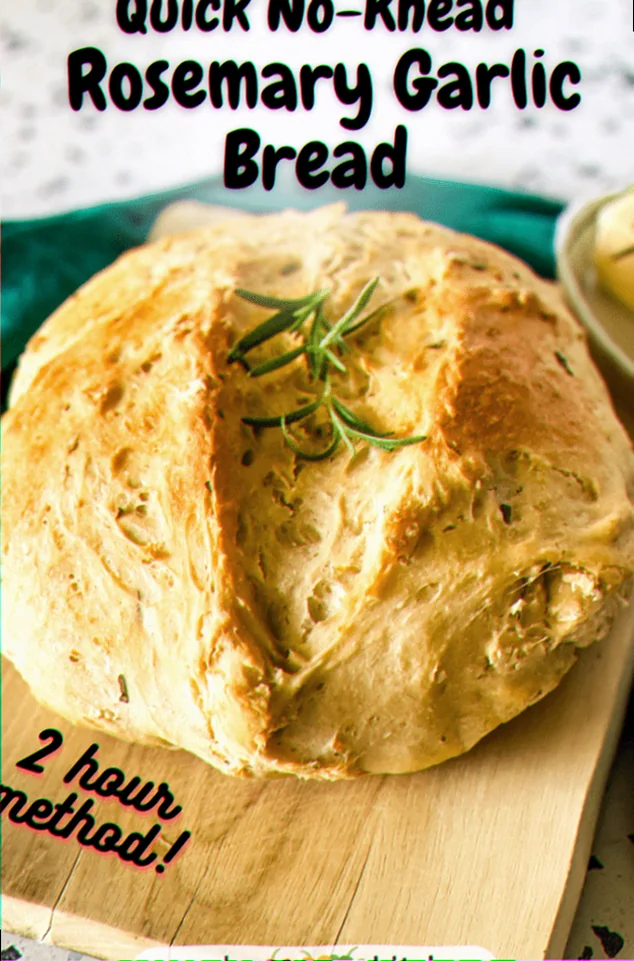
The dry, resinous perfume of Rosmarinus officinalis hangs heavy in the sun-baked air of the Italian hillsides, a scent that has wafted through the Mediterranean for millennia. Imagine a Roman villa kitchen, not in the opulent dining halls, but the working heart of the estate, where enslaved bakers transform simple grains into the daily bread that fuelled an empire. Or perhaps a Ligurian coastal village, centuries later, where a nonna, her hands gnarled from a lifetime of labour, presses sprigs of rosemary into a rustic flatbread, ready for the communal oven. This act of baking, often a shared endeavour, was more than mere sustenance; it was the foundation of community, a silent ritual of life itself, echoing back to antiquity.
Where Herbed Hearth-Loaf Comes From — and Why It Was Invented
The concept of a simple, herbed bread, particularly one featuring rosemary, finds its deep roots in the agricultural and culinary landscape of the ancient Mediterranean. While the “vegan rosemary bread machine recipe” we consider today is a distinctly modern construct, its elemental components hark back to the panis rusticus of the Roman Empire, and even earlier, to Etruscan and Greek flatbreads.
This bread was not “invented” in the singular sense, but rather evolved as a pragmatic solution to fundamental human needs. The problem it solved was simple: how to create a nourishing, portable, and flavourful staple from readily available local ingredients. In regions like Liguria, Tuscany, and across the Roman provinces, wheat was a primary crop, providing the necessary starch. Olive trees flourished, offering a rich, stable fat and flavour. And crucially, rosemary grew wild in abundance, requiring no cultivation, only the knowledge of its culinary and medicinal properties.
The climate of the Mediterranean, characterised by long, hot, dry summers and mild, wet winters, was ideal for both wheat and olive cultivation. The coastal proximity and rugged terrain of regions like Liguria meant that large-scale livestock farming was less prevalent than in other parts of Europe, leading to a greater reliance on plant-based fats like olive oil. This natural availability meant that many early breads were, by default, often plant-based, making the “vegan” aspect less of an adaptation and more of a return to ancient dietary patterns. The robust flavour of rosemary, often combined with salt, offered a simple yet potent way to elevate a basic dough, turning everyday bread into something both satisfying and aromatic, a testament to the ingenuity of using what the land freely offered.
The Ingredients as Historical Artefacts
Each component of a rosemary loaf carries a story, a trajectory through human history that speaks volumes about agriculture, trade, and cultural exchange.
- Wheat Flour (Triticum spp.): The very foundation of this bread is wheat, domesticated over 10,000 years ago in the Fertile Crescent. Its journey into Mediterranean cuisines, particularly Roman, was transformative. The Romans, masters of agriculture and logistics, established vast granaries and trade routes to supply their burgeoning empire with triticum. Wheat flour, especially finely milled varieties, became a symbol of civilisation and prosperity, distinguishing Roman fare from the coarser barley breads of earlier eras. Its availability allowed for the development of diverse bread types, replacing wild grains and simpler gruels as the dietary cornerstone.
- Rosemary (Rosmarinus officinalis): This evergreen shrub is indigenous to the Mediterranean region, thriving in its sunny, rocky coastal areas. Revered by the ancient Greeks and Romans, rosemary was more than just a culinary herb; it was a symbol of remembrance, fidelity, and even protection. It adorned bridal wreaths, was scattered at funerals, and burned as incense. Its pungent, pine-like aroma and slightly bitter flavour found its way into Roman cooking not just for taste, but for its perceived medicinal properties, aiding digestion and memory. Its inclusion in bread was a natural progression, providing flavour, acting as a mild preservative, and imbuing the simple loaf with a sense of the sacred and the wholesome.
- Olive Oil (Olea europaea): Often called “liquid gold,” olive oil is one of the oldest cultivated foods in the Mediterranean, with evidence of olive pressing dating back over 6,000 years. Its journey is intertwined with ancient trade networks, particularly Phoenician and Greek maritime routes, which disseminated olive cultivation across the Mediterranean basin. In Roman kitchens, olive oil was the primary cooking fat, used extensively in everything from cooking to religious rituals and personal care. Its rich, fruity notes and ability to create a tender crumb in bread made it indispensable. Its presence in this bread is a direct link to the ancient pantry, a marker of Mediterranean identity that signifies both health and a deep connection to the land.
Panis Rosmarinus — When and Why This Dish Is Made
In its historical context, the herbed hearth-loaf, or panis rosmarinus, was not reserved for grand celebrations but rather was a ubiquitous element of daily life, particularly in rural and working-class communities. It symbolised sustenance, community, and the bounty of the land.
It would appear at virtually any meal, often alongside simple vegetable stews, cheeses, or cured meats. However, its aromatic qualities lent themselves particularly well to certain social rituals. During harvest festivals, such as the Roman Cerealia honouring Ceres, the goddess of grain, or later, regional Christian harvest celebrations, a freshly baked rosemary loaf would be a central feature. Its perfume would mingle with the smells of the season, a sensory embodiment of gratitude for the year’s yield.
The act of baking itself, especially in communities with a shared communal oven, was a social event. Women would gather, share stories, and oversee the baking, ensuring that each family’s loaves emerged perfectly. Sharing a freshly baked rosemary loaf meant sharing warmth, nourishment, and a connection to tradition. It signalled hospitality, offering a simple yet deeply meaningful welcome to guests. The robust, earthy flavour of rosemary, paired with the rustic texture of the bread, was perfectly suited to these moments – comforting, unpretentious, and deeply satisfying, reflecting the values of hard work and communal support inherent in these cultures.
How The Diaspora and Modernity Changed Rosemary Hearth-Loaf Forever
As populations migrated and technologies advanced, the humble herbed hearth-loaf embarked on a journey of transformation. The first major shift came with the Italian diaspora in the late 19th and early 20th centuries. Italian immigrants carried their culinary traditions to new lands, particularly the Americas. In kitchens far from the sun-drenched hills of their homeland, ingredients were often scarce or different. While rosemary might still be cultivated, olive oil could be prohibitively expensive, leading to substitutions like lard or other vegetable oils, altering the texture and flavour profile. The communal oven gave way to individual home ovens, and the hand-kneading tradition, while cherished, often became a solitary act.
The mid-20th century brought the rise of health and plant-based food movements. As awareness of dietary choices grew, and as access to diverse ingredients expanded, the inherent “vegan-ness” of ancient breads was rediscovered or intentionally adopted. This led to a conscious decision to use only plant-based fats like olive oil, even when animal fats might have become more available or cheaper. This adaptation was less about necessity and more about ethical or health-driven choice, a deliberate return to a perceived purity of ingredients.
The most profound change, however, arrived with the domestic bread machine in the late 20th century. This technological innovation irrevocably altered the process of bread making. It democratised baking, making fresh bread accessible to anyone, regardless of skill or time. The bread machine replaced the skilled hands of the baker, the tactile connection to the dough, and the communal warmth of the hearth with a programmed cycle and an electric motor. While it retained the core ingredients and the aromatic promise of rosemary, it fundamentally shifted the ritual from a labour of love and community into an act of convenience and individual consumption. What was gained was accessibility and ease; what was lost was the ancient dance of human hands with living dough, the sensory richness of the process, and the quiet wisdom passed down through generations.
How to Make Vegan Rosemary Bread Machine Loaf — The Recipe in Full
Related topics: Vegan sweet potato bread recipe · Deep fried pickles recipe vegan · Applesauce vegan cupcakes recipe
This modern iteration embraces convenience while striving to capture the essence of its ancient ancestor.
| Ingredient | Quantity | Why it’s here |
|---|---|---|
| Warm Water (38-43°C) | 300 ml | Activates the yeast; its warmth is crucial for optimal fermentation. |
| Active Dry Yeast | 7g (2.25 tsp) | The leavening agent; transforms sugars into |