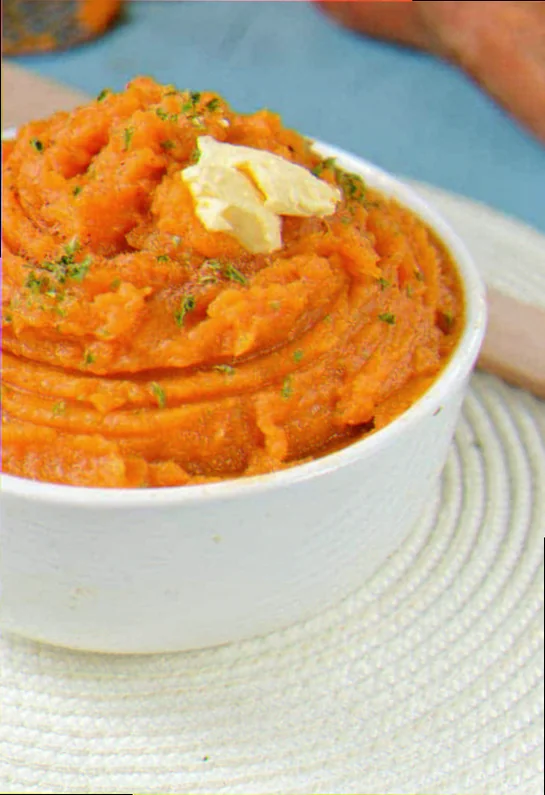
I spent three years getting Vegan mashed sweet potato recipes wrong before I understood that the enemy wasn’t the lack of dairy, but the abundance of water. My early attempts were, frankly, an insult to the tuber. I’d serve up a bowl of orange, watery sludge that tasted like a soggy harvest candle, hoping my guests wouldn’t notice the weeping puddle of moisture at the bottom of their plates. Everything changed the moment I discovered Miso-Butter Emulsification. That single revelation—the idea that you could create a complex, lactic-style richness using fermented bean paste and fat rather than relying on thin nut milks—transformed my mash from a side dish nobody wanted into the thing people actually scrape the pot for.
Why Most Versions of Vegan Mashed Sweet Potatoes Fail
The “Boil-and-Mash” approach is the “wrong way” that almost every home cook tries first, and it is the primary reason vegan versions fail so miserably. When you peel a sweet potato, cube it, and drop it into boiling water, you are inviting disaster. Unlike a starchy Russet, which can handle a bit of a bath, the sweet potato is porous and sugar-heavy. Boiling it dilutes those sugars and fills the cells with water, resulting in a texture that is translucent and “heavy” rather than fluffy and opaque. Most people then try to fix this water-logged mess by adding more vegan butter or almond milk, which only creates a greasy, thin soup. Real success requires a concentrated, roasted base, not a boiled one.
The Ingredients That Actually Matter
I don’t just grab any orange potato. I’ve found that 1.5kg of Jewel or Garnet sweet potatoes—the ones with the deep copper skin—are non-negotiable. I avoid the pale-skinned Beauregards because they lack the necessary sugar density for a proper roast. To build the “butter” without a cow in sight, I’ve settled on a specific ratio of fats: 60ml of high-quality extra virgin olive oil for its peppery backbone and 30g of refined coconut oil. I specify refined because I don’t want my Thanksgiving dinner tasting like a piña colada; I just want the saturated fat that mimics the mouthfeel of dairy.
Then comes the hero: 20g of white miso paste. I tried yellow and red, but they are too aggressive, masking the potato rather than lifting it. The white miso provides that fermented, salty “funk” that you usually get from buttermilk. To balance that salt, I fold in 15ml of Grade A Amber maple syrup. It has to be Amber—anything darker is too molasses-heavy, and anything lighter is just sugar. Finally, I finish with 5g of flaky sea salt and a literal pinch of ground ginger to cut through the richness.
The Moment Everything Changes: Miso-Butter Emulsification
The Miso-Butter Emulsification is the technique that defines success in my kitchen. In traditional French cooking, you’d mount a sauce with cold butter to create a stable, creamy texture. In a vegan mash, we are doing the same thing but with a miso-oil slurry. If you just throw miso into the potatoes, you get salty clumps. If you just pour in oil, it leaks out. By whisking the miso, olive oil, and coconut oil together into a thick, pale emulsion before it ever touches the potatoes, you create a delivery system for fat that binds to the potato starch. This prevents the “weeping” effect and gives the mash a sheen and a “cling” that is identical to a high-end restaurant puree.
How I Actually Make It Now — Step by Step
I don’t reach for a peeler anymore. I reach for my heaviest roasting tray and a roll of parchment paper.
The High-Heat Cure: I preheat my oven to 200°C. I take the 1.5kg of sweet potatoes, scrub them clean, and prick them all over with a fork. I don’t wrap them in foil—foil steams them, and we want to roast them. I lay them on the parchment and roast for 45 to 60 minutes. I’m looking for the skins to turn dark and papery and for the natural sugars to bubble out of the fork holes and caramelize. If they aren’t oozing a bit of “honey,” they aren’t ready.
The Steam-Peel: Once they’re soft to the touch, I pull them out and throw a clean kitchen towel over the whole tray for 10 minutes. This trapped steam loosens the skins perfectly. I then slice them open and scoop the flesh into a bowl. At this stage, the smell should be deeply toasted, almost like toasted marshmallows.
The Manual Breakdown: I never, ever use a food processor or a blender. I’ve learned the hard way that mechanical blades turn sweet potato starch into a literal glue. I use a ricer or a food mill. I pass the warm flesh through the smallest holes into a pre-warmed bowl. If the bowl is cold, the fats won’t emulsify; it has to be warm to the touch.
The Emulsion Fold: While the potatoes are still steaming, I whisk my 20g of miso, 60ml of olive oil, and 30g of coconut oil in a small cup until it looks like a thick vinaigrette. I pour this over the riced potatoes and fold it in gently with a silicone spatula. I’m watching for the moment the oil disappears and the potatoes take on a velvet-like matte finish. This is when I fold in the 15ml of maple syrup and the 5g of salt.
The Final Aeration: I give it one last vigorous whip with a hand whisk—just for 30 seconds—to incorporate a tiny bit of air. The result should be a mountain of orange clouds that holds its shape when peaked.
The Failures I Still See — and How to Fix Them
- The Glue Factory: This is caused by over-mixing with a motor-driven blade. If you’ve already done it, you can’t “un-glue” it, but you can save it by spreading it in a dish, topping it with breadcrumbs, and baking it as a gratin. The oven heat will set the starch and make it edible again.
- The Fibrous Nightmare: Some sweet potatoes are just stringy. This is an ingredient-level failure. The fix is the food mill—if you use a ricer, the strings stay in. If you use a food mill, the strings get caught in the plate and you get only the smooth flesh.
- The Flat Flavor: This happens when you forget the acid or the umami. If your mash tastes “boring,” don’t add more salt. Add a teaspoon of apple cider vinegar. The acid cuts through the heavy sugars and wakes up the miso.
When I Make This and What I Serve It With
This dish is my “Friendsgiving” MVP. It’s the one thing I bring when I know there will be both vegans and staunch “meat-and-potatoes” people at the table, because it doesn’t taste like a compromise. I always serve it alongside a tray of roasted Brussels sprouts—the char on the sprouts is the perfect bitter foil to the sweet mash. My second essential pairing is a thick mushroom gravy made with porcini broth; the earthy, forest floor notes of the mushrooms vibrate against the miso in the potatoes. To drink, I insist on a dry, crisp hard cider. The effervescence and apple acidity cleanse the palate between bites of the rich, creamy mash.
Substitutions I’ve Tested Honestly
- White Miso → Nutritional Yeast: I tried this once when I was out of miso. It was a disaster. It made the potatoes taste like “fake cheese” and ruined the elegance of the dish. Don’t do it.
- Maple Syrup → Brown Sugar: This is a semi-acceptable swap, but the brown sugar can feel gritty if not fully dissolved. If you use it, whisk it into the oil emulsion first.
- Coconut Oil → Vegan Butter: Most vegan butters are mostly water and pea protein. If you use them, you lose that “clean” fat finish. It’s a pass, but barely.
Questions I Get Asked About Vegan Mashed Sweet Potatoes
Can I make this ahead of time?
Yes, but don’t reheat it in the microwave. The microwave vibrates the water molecules and breaks the emulsion, leaving you with a greasy mess. Reheat it in a pot over low heat with a splash of oat milk to bring the creaminess back to life.
Related topics: Vegan sweet potato bread recipe · Vegan no carbs recipes · Gluten and soy free vegan recipes
Why do you leave the skins on during the roast?
The skin is a flavor barrier. It keeps the volatile aromas inside the potato and allows the sugars to caramelize against the skin rather than burning on the tray. Plus, peeling a raw sweet potato is a great way to lose a finger.
Is it okay to use Yams instead?
In the US, what we call “Yams” are usually just sweet potatoes. But if you mean the true, starchy African Yam, then no. This recipe relies on the high sugar content of the orange-fleshed sweet potato. A true Yam will be dry, white, and starchy—you’d need a completely different fat-to-liquid ratio for that.