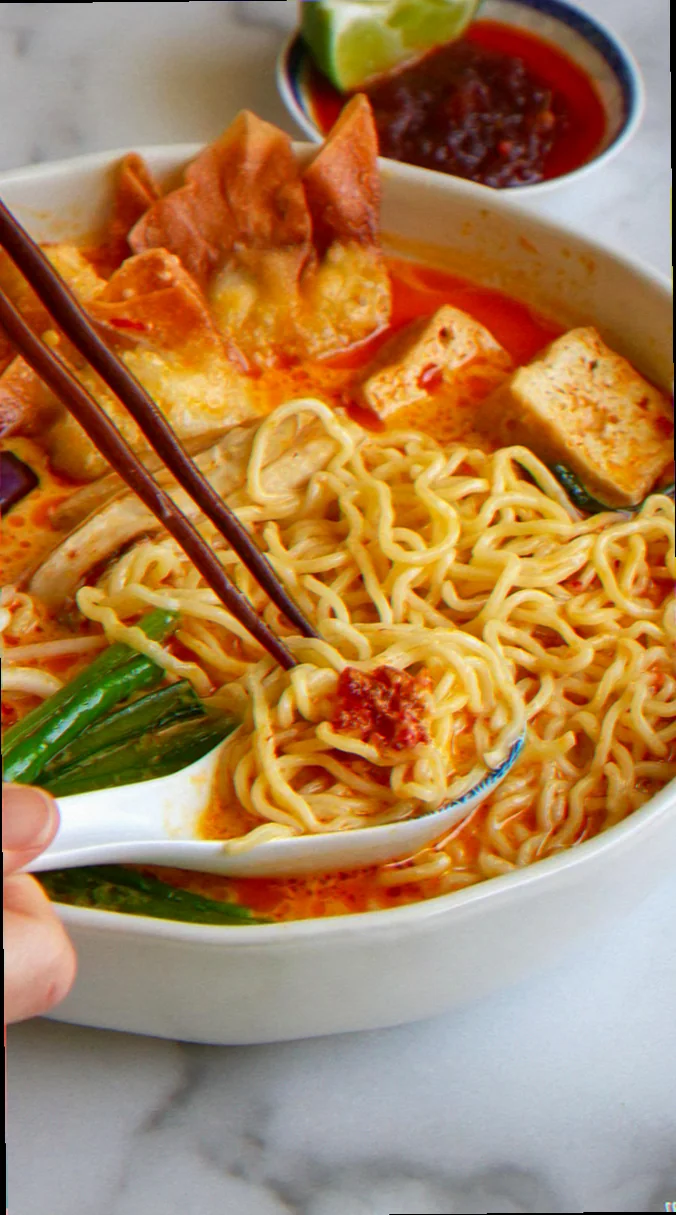
The most common culinary heartbreak when attempting Vegan Curry Mee is the Watery, Bland Broth. You’ve spent time gathering ingredients, blending a vibrant rempah, only to end up with a pale, thin liquid that lacks the signature richness and complex spice profile. It feels diluted, a shadow of the robust, flavourful experience you craved. This guide addresses every potential pitfall – from ingredient selection to technique execution – ensuring your next bowl is nothing short of perfection.
What Perfect Vegan Curry Mee Actually Looks, Feels, and Tastes Like
| Stage | Success marker — what you should see / feel / smell / hear |
|---|---|
| Before cooking (Rempah) | A vibrant, reddish-orange paste, smooth but still showing the fibrous texture of lemongrass and galangal. Smells intensely aromatic, raw but promising. |
| During cooking (Sautéing Rempah) | The paste darkens to a deep brick red, oil separates and shimmers around the edges, forming a distinct ring. A rich, toasted spice aroma fills the kitchen. Gently bubbling, no aggressive sizzling. |
| At the finish (Broth) | A rich, opaque, reddish-orange broth, slightly viscous but pourable, with a glossy sheen. No visible separation of oil or water. The aroma is a complex tapestry of sweet, spicy, herbal, and umami notes. |
| When serving (Assembled bowl) | The broth coats the noodles and garnishes evenly. Noodles are springy and distinct, not clumped. Fresh garnishes provide vibrant colour and crunch. The first taste is a harmonious balance of sweet, salty, sour, and spicy, with a satisfying umami depth and a lingering warmth. |
The Ingredient Failures — Wrong Choices Before You Even Start Cooking
- Watery, Bland Broth: caused by using low-fat coconut milk or diluted vegetable stock → fix: use full-fat canned coconut milk (17-24% fat content) and a concentrated, low-sodium vegetable stock.
- Lacklustre, Flat Aroma: caused by stale dried chilies, ginger, galangal, or lemongrass → fix: ensure dried chilies are pliable, not brittle, and use fresh, firm ginger, galangal, and lemongrass with strong aroma.
- Slimy, Discoloured Garnishes: caused by old or improperly stored bean sprouts and tofu puffs → fix: purchase fresh bean sprouts (crisp, white, no black spots) and firm tofu puffs; store bean sprouts in cold water in the fridge, changing water daily.
- Bitter Aftertaste: caused by rancid oil or old, poorly stored spices → fix: use fresh, neutral-flavoured cooking oil (e.g., canola, refined coconut oil) and regularly check the expiry and aroma of your dried spices.
The Technique Failures — What Goes Wrong During Cooking
- Gritty, Uncooked-Tasting Rempah: what it looks/tastes like: the broth has a raw spice flavour and a grainy texture, the paste doesn’t fully dissolve → caused by not frying the curry paste (rempah) long enough or with insufficient oil → fix: sauté the blended rempah in at least 60ml of oil over medium-low heat for 15-20 minutes, stirring constantly, until the oil separates and the paste darkens significantly. This process is called “breaking the oil.”
- Split, Oily Coconut Milk: symptom: the broth appears curdled, with a distinct layer of oil floating on top and a thin, watery liquid below → caused by over-boiling coconut milk or adding acidic ingredients too quickly to hot coconut milk → fix: add full-fat coconut milk at the end of cooking, bring it to a gentle simmer (around 95°C) but never a rolling boil, and stir it in slowly to ensure emulsification.
- Mushy, Overcooked Noodles: symptom: noodles are soft, gummy, and break easily; they clump together in the bowl → caused by cooking noodles directly in the broth or overcooking them in boiling water → fix: cook fresh yellow noodles and vermicelli separately in ample boiling water until al dente (approx. 1-2 minutes for fresh noodles), then immediately drain and rinse thoroughly with cold water to stop cooking and remove excess starch.
- Overly Starchy Broth: symptom: the broth is cloudy and feels thick or slimy, rather than rich and smooth → caused by not rinsing noodles sufficiently or adding unrinsed noodles directly to the broth → fix: always rinse cooked noodles thoroughly under cold running water until the water runs clear. Never add unrinsed noodles to the main broth pot.
The Equipment Failures — When Your Tools Are the Problem
- Inconsistent Rempah Texture / Burnt Paste: what the wrong version causes: a lumpy rempah or unevenly cooked paste that burns easily → what to use instead: a heavy-bottomed Dutch oven or wok with good heat retention and distribution. Why it matters: thin-bottomed pans can cause hot spots, leading to burning before the spices are fully cooked through and the oil separates.
- Grainy Rempah Paste: the failure it produces: a coarse, unblended curry paste that impacts broth smoothness → the fix: use a high-speed blender or food processor. The workaround if unavailable: a mortar and pestle will achieve superior texture but requires significant time and effort (45-60 minutes of pounding).
- Unbalanced Flavours (Heat/Salt): why this specific tool exists for this dish: accurate measuring spoons and cups are critical for precise spice and seasoning balance. Acceptable substitute: for liquids, a clear glass measuring jug; for dry spices, level teaspoons and tablespoons, ensuring consistent measurement. Eyeballing can lead to a dish that’s too bland, too spicy, or too salty.
Related topics: Applesauce vegan cupcakes recipe · Vegan rosemary bread machine recipe · Deep fried pickles recipe vegan
The Full Recipe — Built Around Preventing Every Failure Above
- For the Curry Paste (Rempah):
- 10-12 dried red chilies, rehydrated in hot water for 15 mins, deseeded for less heat (or kept for more) — prevents Lacklustre Aroma / Unbalanced Heat
- 1 large onion, roughly chopped — adds base flavour
- 5 cloves garlic — adds aromatic depth
- 2-inch piece fresh galangal, peeled, sliced — prevents Lacklustre Aroma
- 2 stalks lemongrass, tough outer layers removed, sliced — prevents Lacklustre Aroma
- 1-inch piece fresh turmeric, peeled, sliced (or 1 tsp ground) — adds colour and earthy notes
- 1 tbsp toasted coriander seeds — prevents Flat Aroma
- 1 tsp toasted cumin seeds — prevents Flat Aroma
- ½ tsp toasted fennel seeds — prevents Flat Aroma
- ½ cup water or vegetable stock — for blending
- For the Broth:
- 60ml neutral cooking oil (canola, refined coconut) — prevents Gritty Rempah / Bitter Aftertaste
- 1.5 litres concentrated vegetable stock (low sodium) — prevents Watery Broth
- 400ml full-fat coconut milk (17-24% fat) — prevents Watery Broth / Split Coconut Milk
- 2 tbsp soy sauce or tamari — adds umami and salt
- 1 tbsp brown sugar or palm sugar — balances heat and sourness
- 1-2 tbsp lime juice, to taste — adds brightness and cuts richness
- Salt to taste
- For Serving:
- 250g fresh yellow noodles, cooked & rinsed — prevents Mushy Noodles
- 100g thin rice vermicelli, cooked & rinsed — prevents Mushy Noodles
- 150g firm tofu puffs, halved — absorbs flavour
- 150g bean sprouts, blanched briefly — provides crunch
- Fresh mint leaves, chopped cilantro,