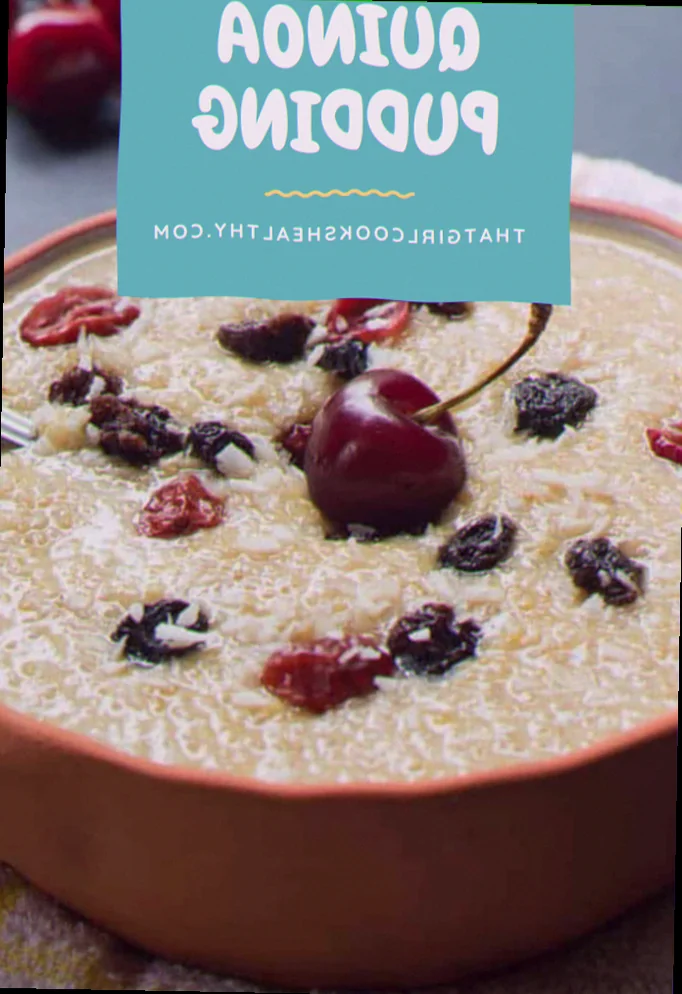
I spent three years getting vegan quinoa pudding wrong before I understood the “Double-Simmer”—the single revelation that transformed this dish from a gritty, bitter health-food punishment into a velvety, custard-like masterpiece. The first time I tried making a vegan quinoa pudding, I treated it like rice. I dumped the grains into a pot with some almond milk, boiled it until the liquid was gone, and ended up with what I can only describe as “sweetened gravel.” It was watery, the quinoa was still unpleasantly “al dente,” and there was a lingering soapy aftertaste that no amount of cinnamon could mask. I almost gave up on the concept entirely, convinced that quinoa simply wasn’t meant to be a dessert. But I was wrong; I was just treating the ingredient with the wrong kind of respect.
Why Most Versions of Quinoa Pudding Vegan Fail
The “Dump and Stir” method is the death of this dish. Most recipes tell you to cook the quinoa directly in plant milk from the start. This is the “wrong way” that leads to disaster. Because plant milks—especially almond or oat—are thinner and have different protein structures than dairy, they don’t penetrate the dense outer shell of the quinoa grain effectively. You end up with a “Lake of Liquid” failure: a bowl of thin, flavored milk with hard little pebbles rolling around at the bottom. Furthermore, skipping the intensive pre-wash means you are locking in the saponins—the natural bitter coating on the seed—which, when boiled down with sugar, creates a cloying, metallic flavor profile. To get a true pudding, you need a texture that is cohesive and creamy, where the grain has bloomed so fully it almost melts.
The Ingredients That Actually Matter
Through dozens of batches, I’ve narrowed my pantry down to four hero ingredients that are non-negotiable. First, I use exactly 185g of triple-rinsed white quinoa. I’ve tried red and black; they are too nutty and fibrous for a delicate pudding. White quinoa has the highest starch release, which is essential for that “pudding” feel. Next is the fat source: I use one 400ml can of full-fat coconut milk. Do not use the stuff from a carton; it’s mostly water and thickeners. You need the 17% fat content of the canned variety to emulsify with the starches. For sweetness, I’ve found that 60ml of Grade A amber maple syrup provides a woody depth that granulated sugar lacks. Finally, I add 10ml of high-quality Madagascar vanilla extract and a generous 2g of fine sea salt. The salt is the secret—it cuts through the heavy coconut fat and makes the quinoa taste like a grain rather than a bean. I also stir in 5g of ground Saigon cinnamon at the very end to keep the flavor bright rather than muddy.
The Moment Everything Changes: The Double-Simmer
The revelation that changed my life was the Double-Simmer technique. Quinoa is biologically a seed, and its starch is locked behind a very stubborn wall. If you cook it only in coconut milk, the fats coat the grain and prevent it from fully hydrating. The Double-Simmer solves this. You first simmer the quinoa in 500ml of filtered water until it is 80% cooked and the “tails” just begin to show. Then, and only then, do you add the coconut milk and syrup to finish the process. This allows the grain to absorb water first to soften the core, and then absorb the fat and sugar to create a creamy emulsion. The difference is night and day: the “before” is a bowl of wet seeds; the “after” is a unified, luxurious custard where the quinoa provides a gentle, popping texture within a sea of cream.
How I Actually Make It Now — Step by Step
I don’t approach this like a casual breakfast; I approach it like a risotto. I stand by the stove, I watch the bubbles, and I listen for the change in sound as the liquid reduces.
The Intensive Scrub: I start by placing my 185g of quinoa in a fine-mesh sieve. I don’t just rinse it; I massage the grains under cold running water for at least two full minutes. You are looking for the water to stop foaming. That foam is the saponin, and it is the enemy of flavor. If you don’t scrub, your pudding will taste like grass.
The Water Bloom: I transfer the wet quinoa to a heavy-bottomed pot and add 500ml of water and that 2g of sea salt. I bring it to a boil, then drop the heat to a whisper—around 95°C—and cover it. I let it go for about 12 minutes. What I’m looking for here is “the crater phase.” Small steam holes should appear on the surface. The grains should be tender but still have a tiny white dot of uncooked starch in the center.
The Cream Infusion: This is where the magic happens. I pour in the 400ml of canned coconut milk and the 60ml of maple syrup. I turn the heat back up slightly and stir constantly with a silicone spatula. I’m not just mixing; I’m agitating the grains to encourage them to release their remaining starch into the coconut milk. I do this for about 8 to 10 minutes. I watch for the liquid to change from a thin milk to a thick, coat-the-back-of-the-spoon consistency. It should look slightly too loose at this stage because it will firm up as it cools.
The Flavor Lock: Once the consistency is like a thick heavy cream, I pull it off the heat immediately. Only now do I stir in the 10ml of vanilla and 5g of cinnamon. If you boil vanilla, you lose the volatile aromatics. I stir it vigorously for 30 seconds, then cover the pot and let it sit for 10 minutes. This “carry-over” cooking time is vital; it’s when the grains finally relax and soak up the last of the flavored fats.
The Failures I Still See — and How to Fix Them
- The Bitter Aftertaste: This is almost always caused by insufficient rinsing. If you’ve already cooked it and it’s bitter, you can’t “wash” it now. The only fix is to double the vanilla and add a squeeze of lemon juice. The acid helps mask the metallic notes of the saponins.
- The Separation: If you see oil beads floating on top of your pudding, you’ve boiled the coconut milk too hard and “broken” the emulsion. To fix this, whisk in 15ml of cold almond milk or water very vigorously off the heat. The temperature drop and the agitation can often bring the emulsion back together.
- The Dry Brick: This happens when you overcook the second stage. If it looks like mashed potatoes, it’s gone too far. Quinoa continues to absorb liquid as it sits in the fridge. I recover this by folding in an extra 50ml of warm coconut milk right before serving to loosen the structure.
When I Make This and What I Serve It With
This dish has earned its place as my go-to “Healing Sunday” brunch. It’s heavy enough to be satisfying but clean enough that I don’t feel sluggish. I always serve it warm, never ice-cold, as the coconut fat can feel waxy at low temperatures. I pair it with roasted balsamic strawberries—the acidity of the berries cuts through the richness of the 400ml of coconut milk perfectly. On the side, I serve a very dark, acidic pour-over coffee. The bitterness of a light-roast Ethiopian coffee acts as a bridge between the earthy quinoa and the sweet maple syrup. It’s also spectacular alongside toasted Marcona almonds for a necessary textural crunch.
Substitutions I’ve Tested Honestly
- Maple Syrup → Date Syrup: I tried this thinking it would be “healthier.” It turned the pudding a muddy brown color and the flavor was too intense, overwhelming the vanilla. Only use this if you want a “caramel” vibe and don’t mind the aesthetic loss.
- Coconut Milk → Almond Milk: A total failure. Almond milk lacks the fat solids to create a “pudding.” It stays watery no matter how long you boil it. If you must avoid coconut, use cashew milk, but even then, the richness won’t be the same.
- White Quinoa → Red Quinoa: The red husks stay firm even after the Double-Simmer. It feels like eating healthy rice, not dessert. Avoid it unless you genuinely enjoy a “crunchy” pudding.
Questions I Get Asked About Quinoa Pudding Recipe Vegan
Do I really have to rinse the quinoa if the bag says “pre-washed”?
Yes, absolutely. “Pre-washed” is a marketing term, not a culinary guarantee. I have never found a brand that was clean enough to skip the two-minute scrub. If you skip it, you’re gambling with bitterness.
Related topics: Vegan asian recipe book · Jackfruit pulled pork vegan recipe · Applesauce vegan cupcakes recipe
Can I make this in a slow cooker?
I wouldn’t. The slow cooker doesn’t allow for the evaporation needed to thicken the coconut milk properly, and you lose the ability to do the Double-Simmer correctly. You’ll end up with a soggy, overcooked mess that lacks the distinct “pop” of the quinoa grains.
How long does it actually stay good in the fridge?
It stays safe for four days, but it’s only “excellent” for about 24 hours. After that, the quinoa starts to break down and the texture becomes more like a porridge than a pudding. If you eat it on day two, you will definitely need to stir in a splash of hot water or plant milk to bring the creaminess back to life.