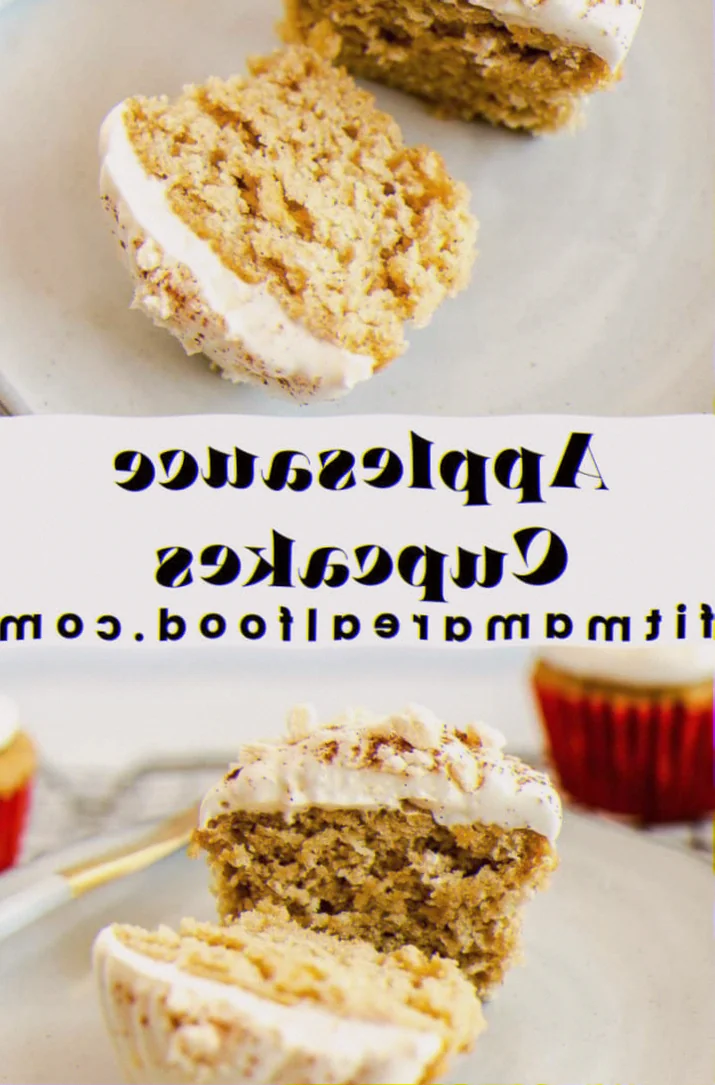
Applesauce Vegan Cupcakes: A Diagnostic Guide to Success
Your vegan apple cupcakes have a soggy bottom, tasting like damp cardboard. This guide diagnoses and eradicates every common failure mode, from a gummy interior to a flat, uninspired rise, ensuring your next batch is a triumph.
What Perfect Applesauce Vegan Cupcakes Actually Look, Feel, and Taste Like
| Stage | Success marker — what you should see / feel / smell / hear |
|---|---|
| Batter (Before cooking) | A smooth, thick, pourable batter, the colour of pale caramel. It should hold its shape briefly when spooned, with a faint scent of apple and spice. |
| Baking (During cooking) | A gentle, steady rise within the oven. Cupcakes should reach 100°C (212°F) in the center when tested with a skewer. The aroma should be warm, sweet, and inviting, with prominent apple and cinnamon notes. |
| Cooling (At the finish) | Perfectly domed tops, a light golden-brown hue, and a springy texture when gently pressed. They should release cleanly from the liner. |
| Serving (When serving) | A tender crumb that yields with a slight chew, not rubbery. The flavour is a balanced sweetness with a clear, bright apple presence and warm spice, finishing clean without greasiness. |
The Ingredient Failures — Wrong Choices Before You Even Start Cooking
- Soggy Bottom: caused by excess moisture from under-squeezed applesauce → fix: Use thick, commercial unsweetened applesauce, or drain homemade applesauce thoroughly through a fine-mesh sieve for at least 30 minutes.
- Rubbery Texture: caused by too much gluten development from over-mixing, or the wrong type of flour → fix: Use cake flour or all-purpose flour with a protein content of 8-10%. Measure flour by weight (200g per 1.5 cups) and avoid over-mixing the batter once flour is added.
- Split Sauce/Greasy Cupcakes: caused by using oil with a very low smoke point or not emulsifying correctly → fix: Use a neutral-flavoured oil with a high smoke point like refined sunflower oil or grapeseed oil (80ml). Whisk wet ingredients thoroughly until emulsified before adding dry.
- Flat Rise: caused by stale or inactive leavening agents → fix: Ensure your baking soda (1.5 tsp) and baking powder (1 tsp) are fresh. Test baking soda by adding 1 tsp to 3 tbsp vinegar – it should fizz vigorously. Test baking powder by adding 1 tsp to hot water – it should bubble actively.
The Technique Failures — What Goes Wrong During Cooking
- Soggy Bottom/Dense Crumb: what it looks/tastes like → a cupcake that feels heavy, moist, and lacks structure, often with a pale base → caused by under-baking or oven temperature too low → fix: Bake at 180°C (350°F) for 20-25 minutes. Test with a skewer inserted into the center; it should come out clean or with a few moist crumbs.
- Rubbery Texture/Tough Crumb: symptom → a chewy, almost bouncy interior that’s unpleasant to eat → cause → over-mixing the batter after adding dry ingredients, leading to excessive gluten development. → fix: Gently fold the dry ingredients into the wet ingredients until just combined. A few streaks of flour are acceptable; they will disappear during baking. Do not beat or stir vigorously.
- Flat Rise/Cracked Tops: symptom → cupcakes that are flat, dense, and may have large cracks on top → cause → oven temperature too high, or leavening agents activating too quickly and then collapsing. → fix: Ensure your oven temperature is accurate using an oven thermometer. If tops crack excessively, slightly lower the oven temperature by 5-10°C (10-20°F) and monitor baking time.
- Seized Chocolate (if adding chocolate chips): symptom → hard, dry lumps of chocolate within the batter → cause → chocolate chips not coated in flour, or batter being too wet. → fix: Toss 100g of vegan chocolate chips with 1 tbsp of the measured flour before folding them into the batter.
The Equipment Failures — When Your Tools Are the Problem
- Uneven Baking/Sticking: what the wrong version causes → cupcakes that bake unevenly, stick to the pan, or have burnt bottoms. → what to use instead → A standard 12-cup muffin tin made of heavy-gauge aluminum or steel. → why it matters → Even heat distribution is crucial for consistent baking and easy release.
- Incorrect Temperature: the failure it produces → over or under-baking, leading to dry or gummy cupcakes. → the fix → An oven thermometer placed in the center of the oven. → the workaround if unavailable → Calibrate your oven by baking a test batch of cookies or muffins. If they consistently bake too fast or too slow, adjust your oven dial accordingly.
- Over-mixing/Under-mixing: why this specific tool exists for this dish → A flexible silicone spatula for folding ingredients gently. → acceptable substitute → A wooden spoon used with a light touch, focusing on folding rather than stirring.
The Full Recipe — Built Around Preventing Every Failure Above
- All-purpose flour (or cake flour for extra tenderness) — 200g — the failure this specification prevents: Rubbery texture from over-developed gluten.
- Unsweetened applesauce (thick, commercial) — 240ml — why this form/grade/temperature matters: Prevents soggy bottoms by minimizing excess moisture.
- Neutral oil (refined sunflower, grapeseed) — 80ml — the failure this specification prevents: Split sauce or greasy cupcakes.
- Granulated sugar — 180g — the failure this specification prevents: Ensures proper sweetness and moisture balance.
- Plant-based milk (soy, almond, oat) — 120ml — the failure this specification prevents: Contributes to the correct batter consistency.
- Vanilla extract — 1 tsp — the failure this specification prevents: Enhances overall flavour profile.
- Baking soda — 1.5 tsp — the failure this specification prevents: Provides lift; ensure it’s fresh.
- Baking powder — 1 tsp — the failure this specification prevents: Additional lift for a tender crumb; ensure it’s fresh.
- Ground cinnamon — 1 tsp — the failure this specification prevents: Enhances apple flavour and prevents blandness.
- Ground nutmeg — ¼ tsp — the failure this specification prevents: Adds depth and warmth to spice profile.
- Salt — ½ tsp — the failure this specification prevents: Balances sweetness and enhances flavours.
- Vegan chocolate chips (optional) — 100g — the failure this specification prevents: Seized chocolate if not coated.
Method:
- Preheat your oven to 180°C (350°F) and line a 12-cup muffin tin with paper liners. — this is where flat rise can happen if oven is too cool. — success marker: A consistently heated oven.
- In a large bowl, whisk together the applesauce, neutral oil, granulated sugar, plant-based milk, and vanilla extract until well emulsified. — the failure this prevents: Split sauce or greasy cupcakes. A smooth, homogenous liquid should form. — success marker: A pale, uniform liquid with no oil separation.
- In a separate medium bowl, whisk together the flour, baking soda, baking powder, cinnamon, nutmeg, and salt. — the failure this prevents: Clumpy dry ingredients leading to uneven leavening and flavour. — success marker: A uniformly coloured, well-combined dry mixture.
- Add the dry ingredients to the wet ingredients. — this is where rubbery texture happens if you over-mix. — success marker: Gently fold until just combined. A few streaks of flour are acceptable; do not beat or stir vigorously.
- If using chocolate chips, toss them with 1 tbsp of the measured flour before folding them into the batter. — the failure this prevents: Seized chocolate. — success marker: Chips are evenly coated and dispersed.
- Divide the batter evenly among the prepared muffin cups, filling each about two-thirds full. — the failure this prevents: Over-filling leading to overflow and uneven baking. — success marker: Consistent fill level in each cup.
- Bake for 20-25 minutes, or until a wooden skewer inserted into the center of a cupcake comes out clean or with a few moist crumbs. — the failure this prevents: Soggy bottom or dense crumb if under-baked; dry, crumbly texture if over-baked. — success marker: A clean skewer and a gently springy top.
- Let the cupcakes cool in the muffin tin for 5 minutes before transferring them to a wire rack to cool completely. — the failure this prevents: Sticking to the tin and potential condensation leading to sogginess. — success marker: Cupcakes release cleanly and cool evenly.
How to Rescue Applesauce Vegan Cupcakes When It Has Already Gone Wrong
- If your cupcakes have a soggy bottom: This is the hardest to fully rescue. Try to gently re-bake them at 160°C (320°F) for an additional 10-15 minutes, placed directly on the oven rack. This may help dry out the base. The texture will likely be compromised, but they may become edible.
- If your cupcakes have a rubbery texture: There is no effective rescue. The gluten has been over-developed. Serve them with a generous dollop of vegan whipped cream or ice cream to mask the texture, or consider crumbling them into a trifle or parfait.
- If your cupcakes are flat and dense: They can be salvaged. Gently break them apart and toast them in a toaster oven or under the broiler until lightly golden. Serve as a base for fruit and cream, or incorporate into a bread pudding.
- If your cupcakes have seized chocolate: Gently try to break apart any large clumps with a fork. The chocolate may be dry, but it will still add flavour.
Make-Ahead: Which Failures This Introduces and How to Avoid Them
Making these cupcakes ahead introduces the risk of staleness and moisture loss or gain.
- Failure: Staleness/Dryness. Cause: Exposure to air. Fix: Once completely cooled, store cupcakes in an airtight container at room temperature for up to 2 days. For longer storage, wrap each cupcake individually in plastic wrap, then place in an airtight container.
- Failure: Moisture gain/Sogginess (especially in humid conditions). Cause: Condensation in the container. Fix: Ensure cupcakes are 100% cool before storing. If storing for more than 3 days, freeze them. Wrap individually in plastic wrap, then in foil, and freeze for up to 3 months. Thaw at room temperature.
Related topics: Vegan rosemary bread machine recipe · Best vegan cupcake recipe ever · Jackfruit pulled pork vegan recipe
Diagnostic FAQ — Real Failures, Real Fixes
My applesauce vegan cupcakes turned out gummy and heavy — what went wrong?
This is likely a dense crumb failure. The most probable cause is over-mixing the batter after adding the dry ingredients, leading to excessive gluten development. For your next batch, fold the dry ingredients in gently until just combined.
They looked right but tasted bland — where did I go wrong?
The lack of flavour points to ingredient quality or insufficient seasoning. Ensure your baking soda and baking powder are fresh, as stale leavening agents can result in a flat flavour profile. Also, don’t skimp on the cinnamon and nutmeg; these spices are crucial for that warm apple flavour.
Everything looked perfect until I took them out of the oven, and they collapsed into a sunken mess — why did it happen?
This is a flat rise failure, often occurring when the leavening agents have activated too quickly and then collapsed. This can be due to your oven temperature being too high initially, causing the cupcakes to puff up rapidly and then fall. For your next batch, use an oven thermometer to ensure accuracy and consider slightly reducing the temperature by 5-10°C (10-20°F) if this happens consistently. If they have already collapsed, they can be rescued by gently breaking them up and toasting them to make “cupcake croutons” for parfaits or trifles.